Custom Exhibit Booths

Custom Exhibit Booths planning in Dallas-Fort Worth, covering footprint strategy, labor, freight, utilities, and attendee flow.

01

How Custom Exhibit Booths shapes the project

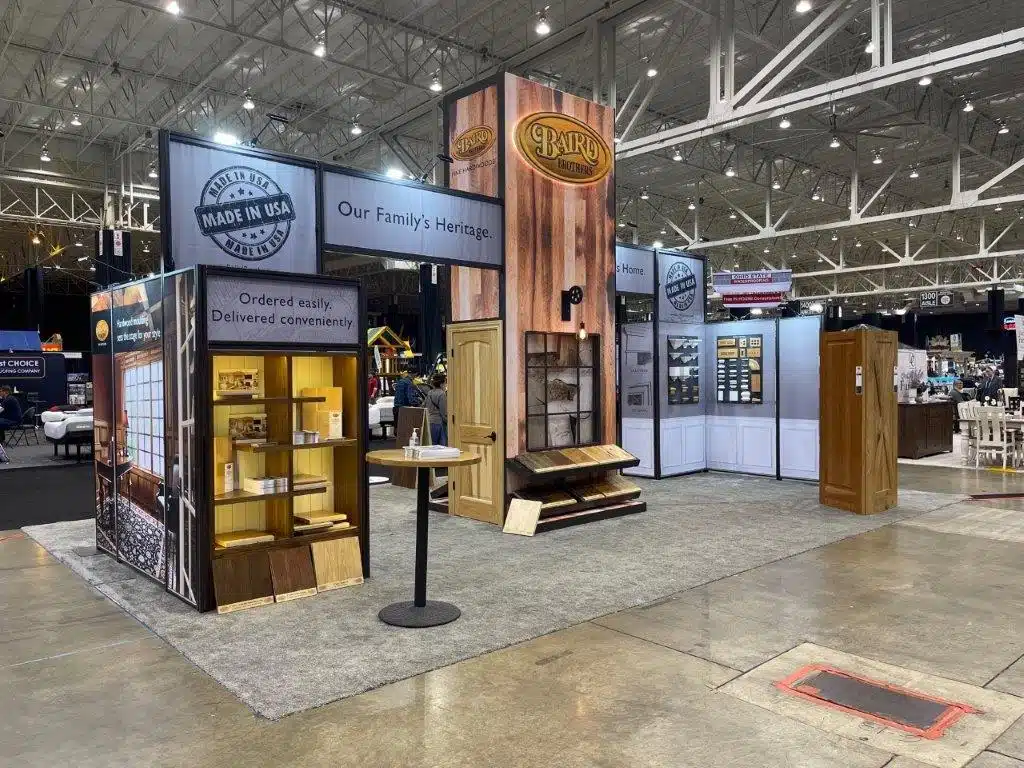
Custom Exhibit Booths is built around tailored architecture, premium brand moments, and controlled attendee movement. That structure changes what the booth must do on the floor and what the team must protect behind the scenes. Freight, assembly order, line of sight, visitor flow, hospitality, and meeting use all depend on whether the format is compact, open, vertical, modular, or temporary. The right answer is the one that supports the brand objective while still respecting budget and schedule.

That is why booth format should be discussed alongside venue fit and labor planning. If the format is chosen without those inputs, the team often pays for the mismatch through extra labor, extra graphics, emergency hardware, or a booth that technically installs but never feels comfortable to staff or to visit. The logistics pressure is fabrication timing, crate logic, high-touch graphics handling, and close show-floor oversight.

  • Structure: tailored architecture, premium brand moments, and controlled attendee movement
  • Logistics: fabrication timing, crate logic, high-touch graphics handling, and close show-floor oversight
  • Venue fit: flagship events and high-value buyer environments
  • Risk: design ambition is approved before freight, utilities, and labor realities are priced honestly
02

Freight, install, and dismantle planning

Fabrication timing, crate logic, high-touch graphics handling, and close show-floor oversight Those factors determine how many crates move, what tools and crew depth are required, how much punch-list time is realistic, and whether the booth can be struck and repacked without damage. Buyers who understand those implications early usually make better cost decisions because they can see where the format will truly demand more labor, more supervision, or more protection in transit. This format fits flagship events and high-value buyer environments, but the risk is that design ambition is approved before freight, utilities, and labor realities are priced honestly.

Installation planning also changes by venue. A downtown exhibit hall may allow more equipment movement and staging than a conference hotel or a premium resort property. The same booth format can feel straightforward in one venue and overly heavy in another, which is why the build plan should be tied to the actual room, dock, and event schedule rather than to a generic booth classification alone. The intended outcome is stronger presence with better protection for budget and timeline, so reuse, utilities, and crew timing need to match the footprint.

03

Attendee flow, staffing, and meeting quality

Booth format influences how guests use the space. Inline and peninsula layouts are often better for focused stories and controlled traffic. Islands favor visibility and circulation. Double-deck and hospitality-heavy designs create room for longer meetings but also introduce more supervision and approval work. Portable and rental systems can move quickly, but they need sharper discipline around graphics, accessories, and staff choreography if they are going to feel polished under traffic. Custom Exhibit Booths depends on tailored architecture, premium brand moments, and controlled attendee movement.

That matters for staffing decisions as well. A booth that looks manageable in renderings may still need more hosts, demo staff, hospitality support, or meeting coordination once the show opens. Format planning is strongest when it helps the buyer estimate those demands before the team commits to a booth that will be difficult to operate comfortably in real time. The logistics pressure is fabrication timing, crate logic, high-touch graphics handling, and close show-floor oversight.

04

Venue rules, utilities, and technical integration

Some booth types increase exposure to venue rules. Larger structures may trigger deeper approval review, heavier utility ordering, additional rigging or safety coordination, and tighter attention to neighboring exhibitors or room access. Even compact systems can create technical issues if monitors, LED, charging, lighting, or live product hardware are not matched to the real utility plan. The format decision should therefore live close to the technical and venue conversation, not separate from it. This format fits flagship events and high-value buyer environments, but the risk is that design ambition is approved before freight, utilities, and labor realities are priced honestly.

The practical benefit is fewer corrections after fabrication, rental commitment, or final graphics release. If the format is already matched to venue approvals and technical needs, the team can move into production with far more confidence that the booth will install the way it was sold. The intended outcome is stronger presence with better protection for budget and timeline, so reuse, utilities, and crew timing need to match the footprint.

05

Reuse, storage, and long-term value

stronger presence with better protection for budget and timeline Long-term value usually comes from how well the format supports reuse. Modular, rental, and portable systems often promise efficiency, but that benefit only shows up when parts are labeled, packed, inspected, and refreshed with enough discipline to make the next event easier. Larger custom structures also benefit from strong reuse planning because replacement cost and freight complexity rise quickly once damage or missing parts enter the cycle. Custom Exhibit Booths depends on tailored architecture, premium brand moments, and controlled attendee movement.

For brands exhibiting repeatedly around Dallas-Fort Worth, booth format should support the entire calendar, not just one date. A format that is slightly less dramatic but easier to store, repack, transport, and refresh may produce better event outcomes over time than a format that wins attention once and becomes a burden everywhere else. The logistics pressure is fabrication timing, crate logic, high-touch graphics handling, and close show-floor oversight.

06

How format decisions affect cost and risk

Design ambition is approved before freight, utilities, and labor realities are priced honestly The booth format sits close to cost because it governs freight weight, labor hours, finish sensitivity, graphic acreage, lighting complexity, and how much supervision is needed on the floor. Treating it like a purely visual choice often causes the budget to widen later, when the team is already committed to the footprint and has fewer easy ways to simplify it. This format fits flagship events and high-value buyer environments, but the risk is that design ambition is approved before freight, utilities, and labor realities are priced honestly.

A better approach is to let format guide budget decisions earlier. If the footprint is likely to demand more power, more labor, more storage, or tighter installation discipline, the buyer should know that before authorizing production. That makes the eventual spend easier to defend and reduces the chance of late-stage compromises that hurt the finished result. The intended outcome is stronger presence with better protection for budget and timeline, so reuse, utilities, and crew timing need to match the footprint.

07

What to confirm next

The next useful step is to confirm footprint size, room or hall assumptions, reuse goals, technical needs, and the volume of guest interaction expected in the space. Those answers reveal whether custom exhibit booths is the best fit and what level of support the booth should carry in freight, labor, graphics, and field management.

When those points are clear, the team can move into venues, services, and scheduling with a much sharper understanding of how the booth should behave. That leads to fewer compromises later and a better match between design ambition and operational reality. Custom Exhibit Booths depends on tailored architecture, premium brand moments, and controlled attendee movement.

It also helps the buyer judge whether the format is pulling its weight commercially, because the booth can then be evaluated against staffing comfort, guest flow, meeting quality, reuse value, and the total cost required to keep it performing over time. The logistics pressure is fabrication timing, crate logic, high-touch graphics handling, and close show-floor oversight.